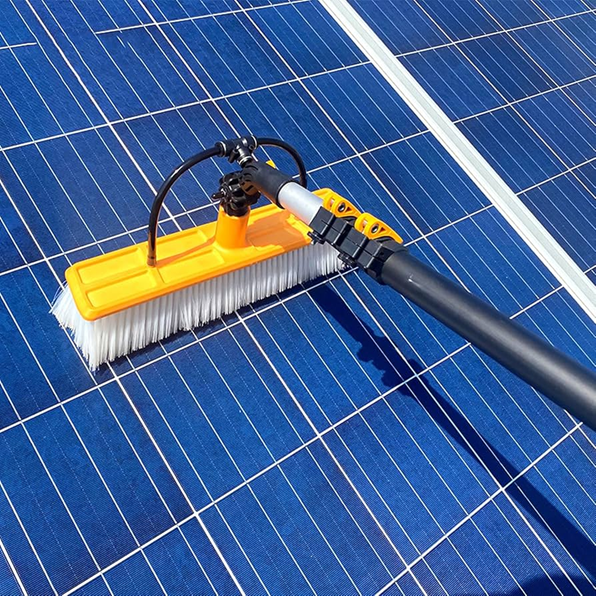
The safest way to clean rooftop solar panels is early morning or late evening, after shutting down the inverter, using plain water and a soft‑bristle brush or water‑fed pole, while avoiding high pressure, harsh chemicals, and walking on panels. FOR INDIO AND THE REST OF THE COACHELLA VALLEY.
And....A very important reminder......The best method to clean solar panels in hot weather is to wait until the panels are cool—early morning, late evening, or an overcast period—and then use soft water + gentle tools. The key is avoiding thermal shock, which happens when cold water hits panels that can reach 150°F in direct sun. This can cause micro‑cracks and long‑term damage. AND, never never clean panels in the middle of a hot day.
Why Hot Weather Changes the Method:
Panels can exceed 150°F in summer sun.
Spraying cool water on hot glass causes thermal stress → micro‑cracks, seal damage, and reduced efficiency.
Hot panels also evaporate water instantly, leaving mineral spots that reduce output. What NOT to Do (Especially in Hot Weather):
No pressure washers (voids warranties, forces water into seals).
No cleaning at midday (thermal shock risk).
No harsh chemicals (damage anti‑reflective coating).
No abrasive pads or metal tools (scratches reduce output).
Hiring a solar panel cleaner in INDIO, FOR EXAMPLE, is usually worth it because the Coachella Valley’s dry climate, dust, pollen, and minimal rainfall create some of the fastest soiling rates in Southern California. The key takeaway: If your panels are roof‑mounted and you care about maximum output, hiring a pro once or twice a year is a smart investment.
Our System to Clean Solar Panels on a Roof (Step-by-Step)
1. Shut down the system:
Before touching anything.
Turn off the AC/DC disconnects at the inverter:
This prevents electrical hazards when using water.
2. Choose the right time:
Panels get extremely hot in sun.
Spraying cold water on hot glass causes thermal stress and long‑term seal damage.
Clean early morning or late evening when panels are cool.
3. Rinse the panels:
Use Garden hose with fan nozzle.
Or a water‑fed pole from the ground. This removes loose dust, pollen, and droppings.
4. Scrub gently:
Use Soft‑bristle brush (car brush or solar brush).
Deionized water if your tap water is hard (prevents mineral spots).
Avoid.........
Deck brushes.
Abrasive pads. . Pressure washers.
5. Work top to bottom:
This prevents dirty runoff from drying on clean glass.
6. Dry or squeegee:
A soft squeegee prevents mineral streaks.
Cleaning the Roof Around Solar Panels:
Roofs with solar panels collect debris under and around the array—leaves, needles, nesting material.
7. To clean under panels:
Use a long-handled brush or crevice vacuum tool.
Avoid disturbing wiring.
Use low-pressure water only.
This prevents fire hazards caused by trapped heat and debris.
8. What NOT to Do:
No pressure washers (forces water into seals, voids warranties).
No harsh chemicals (soap film attracts dust; abrasives scratch coating).
No walking on panels (cracks cells, voids warranty).
No midday cleaning (thermal shock risk).
9. Safety Considerations for Roof Cleaning:
Rooftop cleaning is where most injuries occur—97% of ladder/roof accidents happen at home. If your roof is.....
Single-story, low pitch → DIY is reasonable.
Steep or two-story → Use ground-based tools or hire a pro.
What to Wear:
Soft-soled shoes.
Non-slip footwear.
Harness for steep roofs.
10. How Often Should You Clean?
Dusty/desert areas (like La Quinta, CA) → 2–3× per year
Normal suburban areas → 1× per year, Dirty panels can lose up to 25% efficiency.
When hiring a cleaner definitely pays off.....
You live in a dusty desert region (Indio, FOR EXAMPLE qualifies).
Your panels are low-tilt or flat (they soil faster).
You’ve had wildfire smoke or recent windstorms.
Your monitoring app shows declining output unrelated to weather.
You have hard water, which leaves mineral spots (pros use deionized water to clean.).
AND THE BOTTOM LINE FOR added EXPENSES, IS: If you don't clean your solar panels 2 to 3 times per year, you will have a lost in "production", of the solar panels, not creating the solar performance promised.
you can easily lose about 15% reduction in electrical production of a solar panel, if not cleaned, every 3 to 4 months, and for double sure, once per year. you can learn to calculate the losses, yourself.
One City in the Coachella Valley as an example, of why!
Cleaning your solar panels only once per year is not enough for Indio.
Because you live in the Coachella Valley, your panels face extreme desert conditions that drastically reduce energy efficiency much faster than in other regions. In Indio, you should clean your solar panels every 3 to 6 months (2 to 4 times per year), with a mandatory clean right after the summer monsoon and dust storm season.
Why Indio Needs More Than a Yearly Clean:
Frequent Dust Storms and Haboobs: Strong desert winds constantly coat panels in a thick layer of fine sand and mineral dust. A single high-wind event can instantly drop your solar efficiency by 10% to 15%.
Zero Summer Rainfall:
Indio experiences long periods with absolutely no rain to clear loose debris. Instead, the intense summer heat bakes dust, pollen, and morning dew onto the glass, creating a hardened crust.
High Ambient Pollution:
Periodic agricultural dust from the nearby Imperial Valley and smog blowing in from the pass settle directly onto local rooftops.
Optimized Indio Cleaning Schedule:
To maximize your financial returns and offset high summer air conditioning costs, follow this seasonal schedule: Late Spring (April/May): Clear away winter dust and spring wildflower pollen to prep your system for peak summer generation when utility rates are highest.
Early Fall (September/October): This is the most critical clean of the year. It removes the heavy buildup left behind by summer dust storms and monsoon humidity before the shorter winter days set in.
Local Service & Safety Considerations:
Because of the extreme Coachella Valley heat, you must never spray water on your panels during the day. The thermal shock can instantly shatter the hot glass. If you plan to DIY, only clean them at dawn.
Alternatively, you can utilize specialized local professionals who understand desert soil conditions. Companies with their regional technicians deionized water filtration systems. This is crucial because Indio's tap water is highly mineralized, and using a standard garden hose will leave permanent hard water spots that permanently block sunlight.